Our Team
John H. Snyder PLLC is an independent litigation and strategic advisory practice based in Manhattan. The firm serves a select roster of principals, family offices, and institutional clients in matters requiring senior judgment, discretion, and direct execution.

Brown University, A.B. (Phi Beta Kappa)
U.S. District Court Clerkship
Proskauer Rose (seven years)
Admitted: New York · U.S. Supreme Court
Second Circuit · SDNY · EDNY
John H. Snyder is a trial lawyer and strategic advisor who begins by defining the resolution that must be achieved, then works backward to shape the conditions that make it inevitable.
He approaches disputes as systems governed by incentives, timing, information, and human behavior — not as sequences of arguments.
His work draws on more than two decades of civil litigation, experience founding and advising artificial intelligence companies, and sustained study of institutional decision-making under conditions of information overload.
Over his career, Snyder has operated across roles rarely combined in a single practice: federal judicial clerk, big law associate, solo practitioner, general counsel, founder, investor, mediator, and trial lawyer on both sides of the docket.
That range produces a practical advantage. Strategy is not derived from theory. It is built from experience across legal, financial, and operational domains.
His recent scholarship addresses a central problem in modern litigation: courts are increasingly unable to process factual records at scale. His proposed framework, FRCP 2.0, integrates computational methods into discovery while preserving adversarial discipline and human accountability. Read the article →
Federal civil procedure was designed for a world of information scarcity. That world no longer exists. Modern disputes generate volumes of data that exceed the capacity of traditional discovery to produce intelligible factual records. Snyder’s scholarship proposes FRCP 2.0 — a reconstruction of civil discovery grounded in procedural realism — to restore the conditions under which courts can exercise responsible, visible, and accountable judgment.
Procedure, Responsibility & Institutional Design →
Junto Opportunity Fund I — Manhattan distressed multifamily real estate
J.D. (cum laude), LL.M. in International
& Comparative Law
University of North Carolina, A.B.
(Phi Beta Kappa)
Admitted: New York · Florida · SDNY · EDNY
Languages: English, Russian (fluent),
Mandarin, French, German, Italian, Spanish
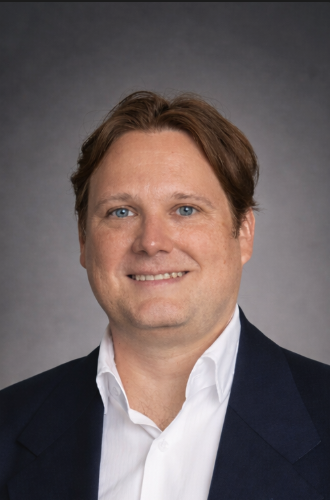
Thomas Sima is a cross-border transactional attorney with over 20 years of experience working with international clients, primarily from the former Soviet Union and East Asia. He began his career in the New York and Hong Kong offices of Shearman & Sterling, where he focused on international finance, mergers & acquisitions, and corporate governance.
Sima serves as General Counsel to Junto Opportunity Fund I LP and advises the firm’s institutional clients on cross-border structuring, fund formation, and international transactions. He composes legal documents in English and Russian and is comfortable reviewing documents in several additional languages.
His practice spans the corporate and structural dimensions of complex disputes — governance, capital structure, and transactional leverage that often determine outcomes before litigation resolves. He coordinates closely with litigation and forensic teams to align corporate decision-making with strategic pressure.